 |
 |
Teacher Observation Checklist: A Complete Guide to Classroom Observation and Teacher Development
Good teaching helps students learn, grow, and feel confident. However, teachers need support and feedback to improve their skills. A teacher observation checklist helps schools review classroom teaching in a clear and fair way.
With this checklist, school leaders can observe lessons, note teaching methods, and see how students respond. They can also find areas where teachers need more support. As a result, schools can build stronger teaching practices and better learning habits.
A good observation should help teachers grow. It should not just point out mistakes. Instead, it should show what works well and what can improve.
With eAuditor Audits & Inspections, schools can use digital checklists to record classroom observations, add notes, and track follow-up actions. This makes it easier to keep records and support teacher development across the school.
What Is a Teacher Observation Checklist?
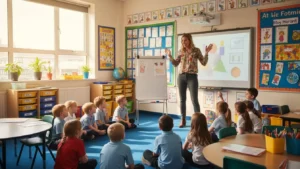
A teacher observation checklist is a tool used to review teaching practices during a classroom lesson. It helps observers assess lesson planning, classroom management, student engagement, teaching methods, and learning outcomes.
School leaders, instructional coaches, department heads, and other authorised staff can use it during scheduled or informal classroom visits.
For example, an observer may check whether the teacher explains the lesson goal, asks questions, gives clear instructions, and supports students who need help.
The checklist should use clear and fair criteria. In addition, observers should consider the lesson context, student needs, subject, and stage of learning.
Most importantly, a single observation cannot show the full quality of a teacher’s work. Schools should combine observation notes with other suitable evidence, teacher reflection, and follow-up discussions.
Why Is a Teacher Observation Checklist Important?
A structured checklist helps schools review teaching in a consistent way. It also gives teachers useful feedback they can apply in future lessons.
1. It Supports Better Teaching
First, the checklist helps observers identify teaching practices that work well. They can also note where teachers may need more support. Therefore, feedback becomes more specific and useful.
2. It Encourages Student Engagement
Students learn in different ways. During an observation, school leaders can check whether the teacher invites questions, encourages participation, and keeps students involved.
3. It Improves Classroom Management
A well-managed classroom gives students more time to learn. A checklist can help observers review classroom routines, behaviour expectations, transitions, and the teacher’s response to disruptions.
4. It Helps Teachers Set Goals
Clear feedback gives teachers a starting point for improvement. For example, a teacher may choose to use more open-ended questions or give students more time to think before answering.
5. It Promotes Fair and Consistent Reviews
When observers use the same criteria, they can reduce differences in how they assess lessons. However, they should still consider subject needs, student age, and lesson objectives.
6. It Supports School Improvement
When schools review observation findings over time, they may notice common training needs. For instance, several teachers may benefit from support with lesson pacing or formative assessment.
Who Should Use a Teacher Observation Checklist?
A teacher observation checklist can support different roles in a school.
- Principals: To review teaching practices and support school-wide improvement.
- Vice principals: To conduct classroom visits and follow up on agreed actions.
- Instructional coaches: To help teachers develop specific classroom skills.
- Department heads: To review teaching within their subject areas.
- Mentors: To support new teachers as they build confidence and experience.
- Teacher trainers: To assess practice during training or professional development.
- School quality teams: To identify patterns and support improvement planning.
- Teachers: To reflect on their own lessons and set personal development goals.
However, schools should explain the purpose of each observation before it takes place. Teachers should know whether the visit supports coaching, routine quality review, or a formal performance process.
What Should a Teacher Observation Checklist Include?
A useful checklist covers the main parts of teaching and learning. It should focus on observable actions rather than personal opinions.
1. Lesson Planning and Preparation
First, review how the teacher prepares for the lesson.
- Is the lesson objective clear?
- Does the lesson follow the planned curriculum?
- Are teaching materials ready?
- Do activities match the lesson objective?
- Is the lesson suitable for the students’ age and learning needs?
- Does the teacher connect the lesson to prior learning?
- Is there a suitable plan for checking student understanding?
2. Subject Knowledge
Next, observe how the teacher explains the subject.
- Does the teacher explain ideas accurately?
- Are examples clear and relevant?
- Does the teacher answer questions appropriately?
- Does the teacher correct misunderstandings?
- Does the teacher connect concepts to real-life situations where suitable?
- Does the teacher use subject-specific terms in an understandable way?
Observers should assess the teaching they can see and hear. They should avoid making assumptions about a teacher’s knowledge based on one difficult question or brief moment.
3. Teaching Methods
Teaching methods should help students understand and apply new ideas.
- Does the teacher explain the lesson clearly?
- Does the teacher use suitable examples?
- Are instructions easy to follow?
- Does the teacher use questions to support thinking?
- Do students have chances to practise new skills?
- Does the teacher check understanding during the lesson?
- Are activities varied when the learning goal requires them?
- Does the teacher adjust the approach when students struggle?
4. Student Engagement and Participation
Student participation can provide useful information about the lesson.
- Are students involved in the learning activities?
- Does the teacher encourage students to ask questions?
- Do students have time to think before responding?
- Does the teacher invite participation from different students?
- Are students given suitable chances to work independently or together?
- Does the teacher respond to signs of confusion?
- Are students able to explain what they are learning?
Remember that quiet students may still be learning. Observers should consider different ways students participate rather than judging engagement by speaking alone.
5. Classroom Management
A positive classroom environment helps students focus.
- Are classroom rules and routines clear?
- Does the teacher manage transitions smoothly?
- Are disruptions handled calmly and fairly?
- Does the teacher use lesson time effectively?
- Are learning materials easy to access?
- Are classroom expectations suitable for the students’ age?
- Does the teacher encourage respectful behaviour?
- Is the learning space safe and organised?
6. Communication and Teacher-Student Relationships
Respectful communication helps build trust.
- Does the teacher speak clearly?
- Does the teacher listen to student questions?
- Are instructions respectful and appropriate?
- Does the teacher respond patiently to mistakes?
- Does the teacher encourage students to keep trying?
- Does the teacher use inclusive language?
- Does the teacher maintain suitable professional boundaries?
7. Assessment and Feedback
Assessment helps teachers see whether students understand the lesson.
- Does the teacher ask questions to check understanding?
- Are students given clear feedback?
- Does the teacher identify common mistakes?
- Are learning checks linked to the lesson objective?
- Does the teacher give students a chance to improve their work?
- Does the teacher adjust instruction based on student responses?
- Are assessment methods suitable for the activity?
8. Inclusion and Differentiation
Students may need different forms of support to reach the same learning goal.
- Does the teacher recognise different learning needs?
- Are instructions accessible to the students?
- Are suitable support materials available?
- Does the teacher offer extra guidance when needed?
- Are activities appropriately challenging?
- Does the teacher encourage all students to take part?
- Are reasonable adjustments made where required?
9. Learning Resources and Technology
Teaching materials should support the lesson rather than distract from it.
- Are books, worksheets, and other resources suitable?
- Are learning materials ready when needed?
- Does the teacher use the board or display clearly?
- Is technology used when it adds value?
- Are digital resources suitable for the students?
- Are classroom materials safe and in good condition?
10. Lesson Closure and Reflection
The end of the lesson should help students understand what they have learned.
- Does the teacher review the main points?
- Are students given a chance to ask final questions?
- Does the teacher check progress toward the lesson objective?
- Are next steps explained?
- Does the teacher identify areas that may need more practice?
- Does the lesson finish in an organised way?
Sample Teacher Observation Checklist
Use this sample as a starting point. Adapt it to the school’s teaching standards, curriculum, and observation goals.
| Observation area | What to look for | Result |
|---|---|---|
| Lesson objectives | The learning goal is clear | Yes / Partly / No |
| Lesson preparation | Materials are ready and suitable | Yes / Partly / No |
| Subject knowledge | Explanations are accurate | Yes / Partly / No |
| Teaching methods | Instructions and examples are clear | Yes / Partly / No |
| Student engagement | Students have suitable ways to participate | Yes / Partly / No |
| Classroom management | Routines and expectations are clear | Yes / Partly / No |
| Communication | Teacher-student interactions are respectful | Yes / Partly / No |
| Assessment | Teacher checks student understanding | Yes / Partly / No |
| Feedback | Students receive useful guidance | Yes / Partly / No |
| Inclusion | Support reflects student learning needs | Yes / Partly / No |
| Learning resources | Materials support the lesson | Yes / Partly / No |
| Lesson closure | Learning is reviewed before the lesson ends | Yes / Partly / No |

Observation details to record
- Teacher or staff identifier, according to school policy
- Subject and class level
- Date and observation time
- Lesson objective
- Observer’s role
- Specific examples of effective practice
- Areas for development
- Teacher reflection or comments
- Agreed actions and target dates
- Follow-up review date
Use evidence-based notes. For example, write, “The teacher asked three follow-up questions and gave students time to explain their answers,” rather than, “The teacher is excellent at questioning.”
How to Conduct a Teacher Observation
A fair observation needs preparation, careful note-taking, and useful follow-up. Use these steps to keep the process clear.
Step 1: Set the Purpose
Decide why the observation is taking place. It may support coaching, routine classroom review, a new teacher’s development, or a formal evaluation.
Then, explain the purpose and criteria to the teacher. This helps everyone understand what the observer will review.
Step 2: Review the Lesson Plan
Before the lesson, review the learning objectives, subject, class level, and planned activities where available.
This context helps the observer understand what the teacher aims to achieve. It also prevents unfair judgements based on activities that do not suit the lesson goal.
Step 3: Observe Without Disrupting Learning
Arrive on time and follow the school’s observation procedure. Watch the lesson and record specific examples of teaching and student responses.
Avoid interrupting unless there is an immediate safety concern or the school procedure requires intervention.
Step 4: Record Evidence
Use the checklist to record what happened. Note examples of clear explanations, student participation, feedback, and classroom routines.
If an area needs improvement, describe the behaviour or event. Avoid personal comments, assumptions, or labels.
Step 5: Review the Findings
After the lesson, compare the evidence with the observation criteria. Identify strengths and a small number of practical areas for development.
Where evidence is limited, state that clearly. Do not treat one short observation as a complete picture of teaching quality.
Step 6: Discuss Feedback With the Teacher
Arrange a feedback conversation at a suitable time. Begin with effective practice, then discuss areas for growth.
Ask the teacher to reflect on the lesson. Together, identify realistic actions that can improve future teaching.
Step 7: Agree on Follow-Up Actions
Record each action, the person responsible, and the target date. For example, a teacher may trial a new method for checking understanding and review its effect during a later lesson.
Finally, revisit the agreed actions. Follow-up helps turn observation into a useful development process.
Common Teacher Observation Mistakes to Avoid
Observation checklists work best when observers use them fairly and consistently. Avoid these common mistakes.
- Relying on personal opinion: Record evidence rather than general impressions.
- Using unclear criteria: Explain what each item means before the observation.
- Ignoring lesson context: Consider the subject, student needs, and learning objectives.
- Focusing only on weaknesses: Recognise effective practice as well as areas for growth.
- Judging a teacher from one visit: Use additional observations or evidence when making broader judgements.
- Comparing different classrooms without context: Apply consistent standards while allowing for relevant differences.
- Giving vague feedback: Suggest clear actions that teachers can apply.
- Failing to follow up: Review progress after the observation.
- Sharing notes too widely: Store records securely and limit access to authorised people.
- Treating the checklist as the only measure of performance: Combine observation with appropriate evidence and the school’s approved evaluation process.
How eAuditor Audits & Inspections Supports Teacher Observation Checklists
Paper observation forms can be difficult to organise, especially when several observers visit different classrooms. A digital checklist can make the process more consistent and help schools manage records.
eAuditor Audits & Inspections can support teacher observation workflows in the following ways.
1. Build Digital Observation Checklists
Schools can set up checklist questions around their teaching standards. These may cover lesson planning, classroom management, communication, student engagement, assessment, and inclusion.
The checklist can reflect the school’s observation process and the areas it wants to review.
2. Record Findings During Classroom Visits
Observers can complete the checklist while watching a lesson. They can record results and add notes that explain what they saw.
Where supported by the configured workflow, they can also attach relevant evidence. This helps make observations more specific and easier to review.
3. Standardise Observation Criteria
A shared checklist helps observers use a consistent structure. As a result, school leaders can reduce confusion about what each observation should cover.
However, a standard form should still allow observers to record context and avoid reducing a complex lesson to a simple score.
4. Document Strengths and Areas for Growth
Observers can use checklist results and notes to record effective teaching practices and areas for improvement. This gives the school a clearer basis for feedback discussions.
Schools should keep comments professional, specific, and focused on teaching practice.
5. Track Follow-Up Actions
When an observation identifies an area for development, the school can record the next steps. Depending on the features and workflow enabled, actions can be assigned to responsible people and tracked through to completion.
For example, a teacher may agree to improve lesson closure by adding a short review activity. A later observation can help the teacher and observer discuss progress.
6. Keep Records Organised
Digital records can help authorised school staff review past observations and follow-up actions. This may make it easier to prepare for coaching meetings and identify common professional development needs.
Schools should confirm which reporting, export, access-control, and retention features are available in their current setup.
7. Adapt Forms to Different Observation Needs
A school may use different checklists for new teachers, subject-specific reviews, peer observations, or coaching visits. A suitable digital workflow can help organise these different processes, subject to available configuration options.
Important note: eAuditor supports checklist-based data collection and inspection workflows. It does not independently determine teaching quality, replace professional judgement, or guarantee better student outcomes. Schools remain responsible for fair evaluation, safeguarding, privacy, staff development, and compliance with applicable education policies.
Explore available resources in the eAuditor Template Library.
Benefits of Using a Teacher Observation Checklist
A well-designed checklist can help schools build a stronger process for reviewing classroom practice.
- Clear expectations: Teachers know which areas the observer will review.
- Useful feedback: Specific notes help teachers understand what worked and what needs attention.
- Consistent observations: Shared criteria help observers follow a common process.
- Better development planning: Schools can link findings to training and coaching.
- Improved recordkeeping: Observations and agreed actions are easier to organise.
- More productive discussions: Evidence gives teachers and observers a clear starting point.
- Ongoing improvement: Follow-up visits help teams review progress over time.
- Stronger school-wide planning: Common themes may reveal where more staff support is needed.
A checklist is most effective when it supports learning rather than fear. Teachers should have a clear chance to discuss findings, ask questions, and take part in their own development.
Best Practices for Teacher Observation
To get the most from your observation process, follow these practical tips.
- Explain the observation purpose before the visit.
- Use clear, relevant, and observable criteria.
- Train observers to record evidence fairly.
- Consider lesson objectives and student learning needs.
- Use specific examples in feedback.
- Recognise effective teaching practices.
- Agree on realistic improvement goals.
- Protect observation records and restrict access.
- Review progress through suitable follow-up.
- Update the checklist when teaching standards or school policies change.
Above all, make teacher development a shared goal. A supportive observation process can help teachers reflect on their practice and find new ways to help students learn.
Frequently Asked Questions About Teacher Observation Checklists
1. What is the purpose of a teacher observation checklist?
It helps observers review classroom teaching in a structured way. It covers areas such as lesson planning, teaching methods, student engagement, classroom management, and assessment.
2. Who can conduct a teacher observation?
Depending on school policy, a principal, vice principal, department head, instructional coach, mentor, or authorised colleague may conduct an observation. The observer should understand the criteria and follow the school’s process.
3. What should a teacher observation checklist include?
It should include clear criteria for lesson preparation, subject knowledge, teaching methods, student participation, classroom management, communication, assessment, inclusion, and lesson closure. It should also provide space for evidence and follow-up actions.
4. How long should a teacher observation take?
The length depends on the purpose and school procedure. Some visits focus on a short part of a lesson, while others cover a full lesson. The observer should gather enough evidence to support the conclusions they make.
5. How often should teachers be observed?
Schools should set a schedule based on their policies, teacher development needs, and evaluation requirements. New teachers may need more frequent coaching, while other teachers may follow a regular review cycle.
6. How can observers make feedback fair?
They should use shared criteria, record specific examples, consider the lesson context, and avoid personal assumptions. They should also explain the findings and give teachers a chance to reflect and respond.
7. Is a teacher observation checklist suitable for new teachers?
Yes. It can help new teachers understand classroom expectations and identify areas where they need support. Pairing observations with mentoring and practical feedback can make the process more useful.
8. Can a teacher observation checklist be used for self-assessment?
Yes. Teachers can use the same or a similar checklist to reflect on lesson planning, student participation, and teaching methods. Self-assessment can help them set goals and prepare for discussions with mentors.
9. Can eAuditor Audits & Inspections support digital teacher observations?
eAuditor Audits & Inspections can support checklist-based observations by helping schools record results, notes, and findings. Depending on the configured features, schools may also use it to organise evidence and follow-up actions.
10. Does a teacher observation checklist measure overall teaching quality?
Not by itself. A checklist records selected aspects of a lesson, but teaching quality involves many factors. Schools should consider additional evidence, professional judgement, student needs, and their approved evaluation process.

Final Thoughts
A teacher observation checklist helps schools review teaching in a clear and structured way. It can highlight effective classroom practices, identify areas for growth, and guide useful feedback.
However, the goal should be more than completing a form. Schools should use observations to encourage reflection, provide support, and improve teaching over time.
With eAuditor Audits & Inspections, schools can organise observation checklists, record findings, and support follow-up actions in a digital workflow. Combined with fair criteria and constructive feedback, this approach can help make teacher development more consistent and practical.
Related eAuditor Resources
| |
|